
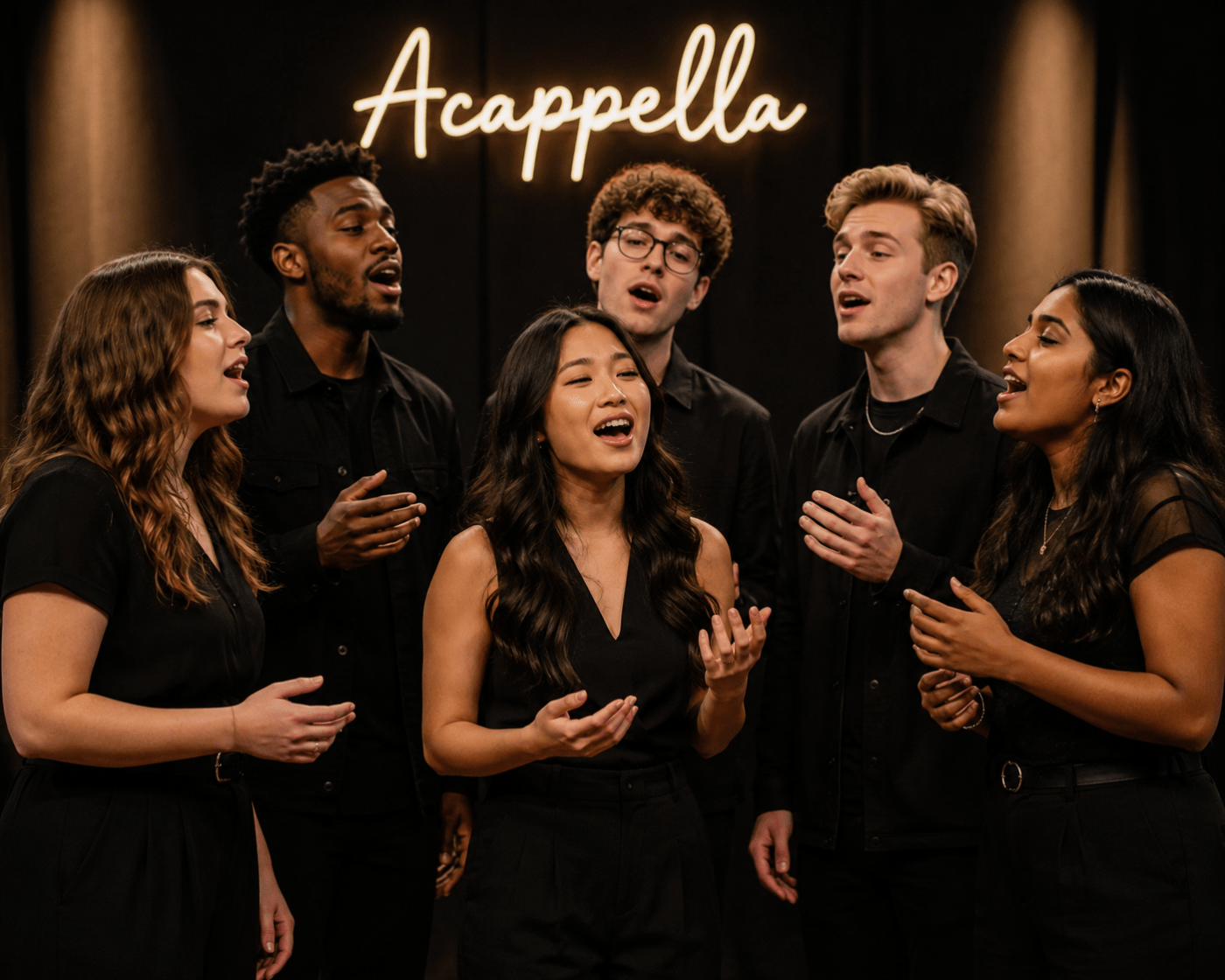
Several years ago, I attended the stage version of the musical ‘The Graduate’, at Mumbai’s Jamshed Bhabha Theatre. Starring former Bollywood star, Zeenat Aman, Aditya Hitkari and some 56 others, the acting was great but it was the music that stole the show. It’s hard to go wrong with any Simon & Garfunkel track, but in this case the highlight was the absence of musical instruments and a back-stage orchestra. It was an astounding performance of A Cappella.
A form of music, A Cappella, often referred to as Acappella, is the art of mimicking notes of musical instruments as well as other sounds that exist in nature with the tongue. The aim is to replace musical instruments with natural voice similar to those produced by musical instruments. For instance, Afghanistan’s national anthem is an A Cappella as musical instruments are viewed as being counter to Islamic tenets.
The ability to use one’s vocal chords predates the invention of languages. However, A Cappella as form of music arose in 9th century CE and was pioneered by the Catholic church for choir music. Though founded in the medieval era, A Cappella got a shot in the arm after NorthWestern University School of Music, set up in 1906 the first ever A Cappella choir at a university. It has since then not looked back.
What makes universities and colleges the perfect breeding ground for A Cappella music? Many universities such as Yale, Harvard and Princeton were the early adopters of A Cappella. That A Cappella does away with musical instruments liberates the need for students to garner financial resources for expensive musical instruments. The community atmosphere and the pursuit of creative freedom provide the perfect environment to develop A Cappella skills. A Cappella has progressed and gone beyond the shores of Western music. In 1996, the University of Pennsylvania witnessed the setting up of the first South Asian A Cappella group called Penn Masala.
Piya Bole (Like I’m Gonna Lose You ) a Hindi-English fusion sung by Penn Masala
The range of sounds that A Cappella groups can reproduce is astonishing. These cover percussion instruments such as drums, congas and handclaps; string instruments such as the guitar, violin and cello; keyboard instruments such as the piano, organ and synthesiser; wind instruments such as the trumpet, saxophone and flute and world instruments such as bagpipes, sitar and tabla. Not only musical instruments, but A Cappella artists are known to reproduce other sounds such as bird calls, wind, bells and sirens.
An amazing A Capella percussion performance by Naturally 7 (from 0″0′ till 1″ 27′)
Charles Kellogg mimics bird sounds in this orchestra performance
Performing a cappella is deceptively simple for it can be extremely challenging. Performers may find it really complicated to stay in tune with the root note in the absence of an instrument. Each individual’s voice is unique which means that groups might need to condition their voices to be in sync with each other’s. The pace needs to be just right, tightly coordinated and not too fast or slow. Artists require a good set of lungs and ongoing breath control and support since there is hardly any room for error.
Here is a selection of acclaimed A Cappella tracks:
The Sound of Silence sung by A Cappella Academy
Maithili Shome performs Take 5 where Jazz Meets Hindustani
Quinta performs My Favorite Things from The Sound of Music
The staged, a cappella version of The Graduate wasn’t just an eye opener. As you can see it was a door-opener to understanding the potential of human beings. If only we could discover and acknowledge the hidden treasures that are buried within ourselves, our planet might be a more melodious habitat. Or should I say an A Cappella abode?
Feature Image: Generated using AI by ChatGPT
Shakti Saran is a systems thinker, writer, consultant, and the Founder of Shaktify, an initiative to power changemakers
Discover more from Shakti's Musings: Blogs on everything under the sun
Subscribe to get the latest posts sent to your email.


Very interesting, Shakti! I have never heard a capella music, though I have been listening to all kinds of music since my young days. Thanks for introducing us to it.
Lata Rele
LikeLiked by 1 person
Thank you Lata. Never too late. I myself learnt about A Cappella later in life
LikeLike