
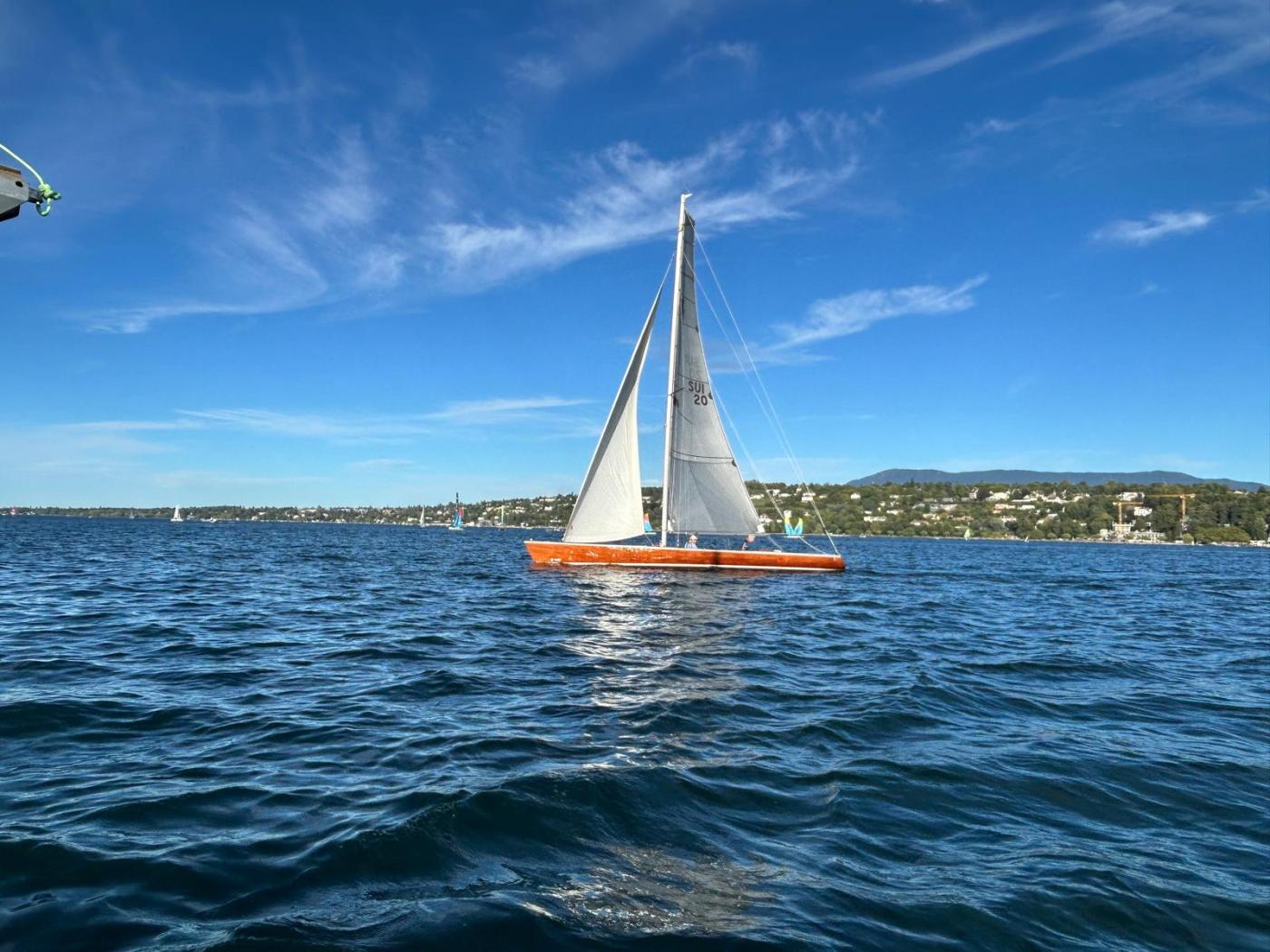
There is a saying that the day a person buys a sailboat is the second happiest day in that person’s life. Any guesses which is the happiest day? Well, folklore has it, that it is the day this person sells the boat. Although I never dreamt of owning a sailboat, the very idea of getting buoyant on a sailing vessel remains irresistible.
I took to sailing in my late teenage years when sailing was an esoteric sport in India. It still is but thankfully less so. When I learnt from my American pen pal, about the sailboat he owned and the sailing expeditions that he and his siblings undertook it fired my imagination. Very soon, I ended up knocking on the doors of the Royal Bombay Yacht Club.
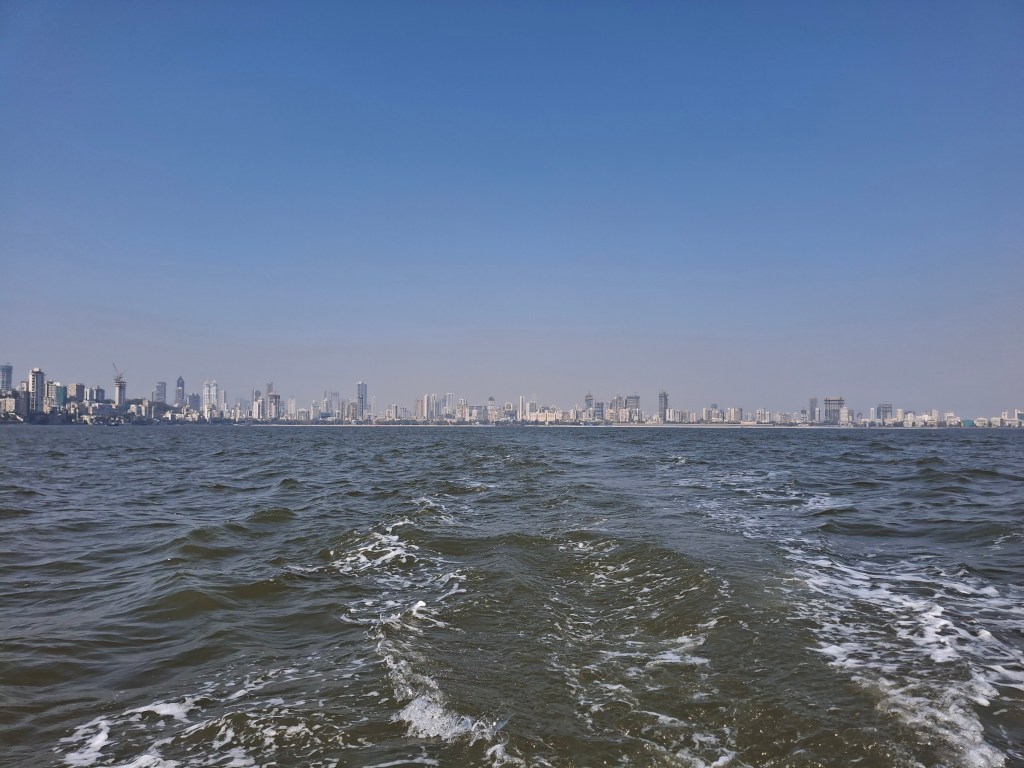
My maiden sailing voyage took place from Gateway of India, Mumbai to Mandwa, 19 nautical miles across Mumbai harbour. I was to drop a veteran sailor and his wife at Mandwa beach and to return to Gateway with the boatman. This sail was characterised by two records which haven’t been broken till date. It remains the fastest I ever got to Mandwa, in an hour and 15 minutes, while the return voyage took over four hours after strenuous paddling efforts. Extremities, you might call my first ever sailing experience but that was also who I was as a person. So, perhaps it was in the fitness of things that my voyage and return were a study in contrast.
Sailing soon turned out to be a pastime that outshone everything else. I took to water four to five days a week whilst I was in college. And it was my good fortune to run into a professor of mine at college. Together student and teacher became pupils of the wind, tides, ocean currents, the boat and its rigging all at once. He and I qualified together for helmsmanship and served as crew for each other.
Most of the sailing I have done has been in the sea — notably in and around Mumbai harbour — with some exceptions in the lakes of Nainital and Geneva. Whilst studying in the U.S., I took a membership of the Boston Sailing Centre where the default boat class used to be the Olympics Soling. This is a racing boat which I helmed extensively for cruising to the several islands that dot Boston harbour.
Racing versus Cruising
When you are taking on a new sport it pays to understand and grasp its different formats. Lacking fiery competitive spirit, I was clear racing wasn’t my calling but it made sense to experience it. Barring once when I helmed a race, I often served as crew to some diehard racers. The sheer limitation of the course of a sailing race went against my idea of embracing the infinite ocean but racing did provide me a holistic view of the sport.
In this sheer no-contest between racing and cruising, the latter won hands down. Yet it never prevented me from taking an interest in racing. When Dennis Conner lost the watershed 1983 edition of America’s Cup, a loss that the Aussies snatched from the Americans after 132 years, the embattled man conceded by saying “some men have responsibilities.” It is trivia like this that has kept me engaged.
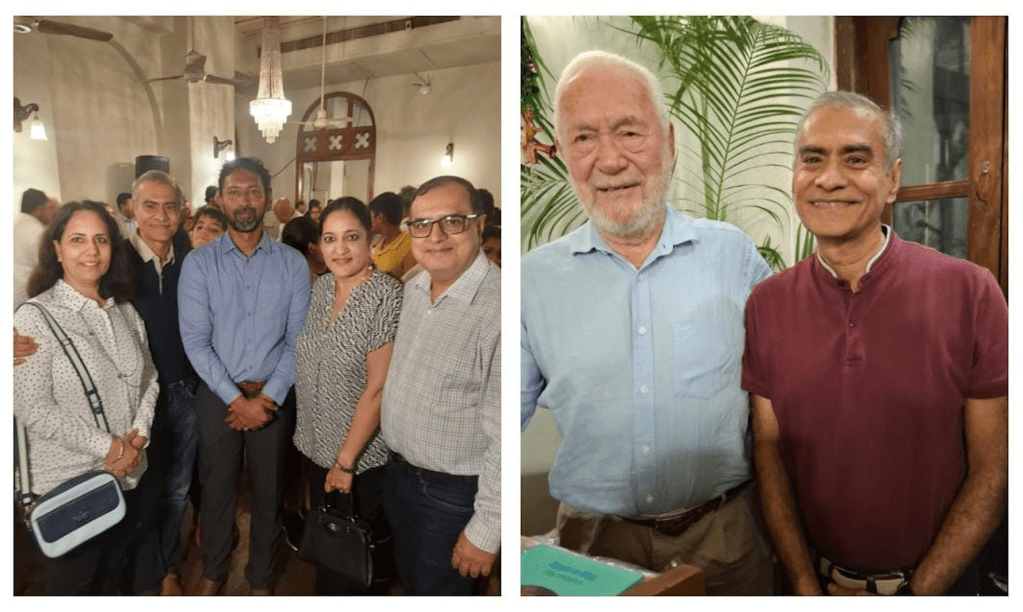
The cherry on the cake was of course my in-person encounters with Abhilash Tomy who stood second in the 2023 edition of the Golden Globe solo round the world race. A year later, I was lucky to attend a talk by the legendary Sir Robin Knox- Johnston, the first person to circumnavigate the world solo in 1968-69. Hearing their inspiring stories has always been a source of wonder.
Life Lessons
Sailing has been much more than a sport for me. It’s been an alternative classroom, learning ground and college all at once. Nowhere have I understood Nature better than on the seas; not the mountains nor the valleys for I have always been attracted to depths over heights. My first lesson in understanding the widespread non-linearity that exists in our universe was on the water.
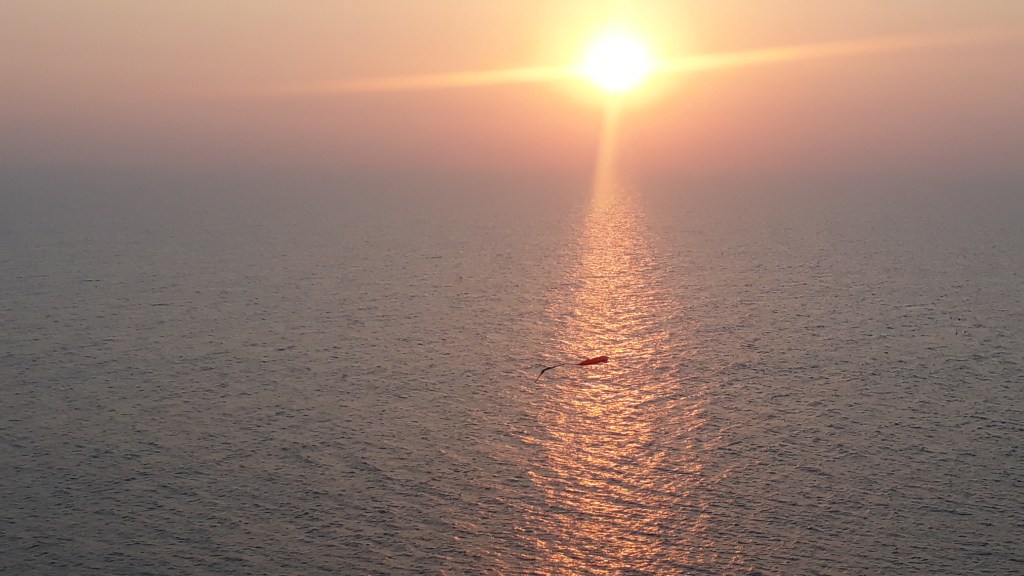
Any sailor will know this: when you try and steer your boat to a destination that falls exactly in the direction of the wind, the boat stalls. You can never get there on a straight line and the course you need to follow is typically zig-zag, Barring the exceptional case of pursuing a destination with the wind running directly from behind, in sailing you always approach your destination non-linearly and not as the-crow-flies. And considering the wind shifts that keep happening, the sailor is always alert to and adapting to a constantly changing environment.
If there is any art of learning how to stay afloat, it is sailing. It prepares you for the volatile, chaotic world that we live in. Looking back, it was sailing that helped me to understand myself better and was my tacit introduction to thinking in systems. The incessant division of cells within our bodies is no different from the constant formation of waves. Every wave is destined to come crashing down and then form again. It is the sheer impermanence of mind and matter that becomes so evident while sailing.
Sailing was my segway to discovering the middle path. It ushered me to the world of contemplation, the art of letting worries go with the wind and helped me become even-keeled while experiencing the joy and beauty of Nature. Now, what could be more fulfilling than this?
Shakti Saran is a systems thinker, writer, consultant, and the Founder of Shaktify, an initiative to power changemakers
Feature image: Sailing on Lake Geneva with iSail Photo courtesy Rohit Nair
Discover more from Shakti's Musings: Blogs on everything under the sun
Subscribe to get the latest posts sent to your email.
 Shakti's Musings: Blogs on everything under the sun
Leave a comment